
Pre-1981
New York City Statistics:
54 cumulative AIDS diagnoses
~15 deaths
1969: A St. Louis teenager, identified as Robert Rayford, dies of an illness that baffles his doctors. Eighteen years later, molecular biologists at Tulane University in New Orleans test samples of his remains and find evidence of HIV.
While sporadic cases of AIDS were documented before 1970, new research suggests that the current epidemic started in the mid-to-late 1970s. In this period, between 100,000 and 300,000 people could have already become HIV+.
April 1980: A San Francisco resident was reported to the Centers for Disease Control with Kaposi's sarcoma (KS)
December 1980: A Brooklyn schoolteacher died of AIDS in New York City. During the fall of 1979, he sought medical advice about the hardened lymph nodes and odd purple skin rash he’d developed. After some testing, doctors diagnosed his rash as Kaposi’s sarcoma, but that was odd because this type of cancer, otherwise known as KS, usually occurred in aging men of Mediterranean ancestry, not someone in his thirties. Before the end of the next year, he didn’t just have KS. He’d developed an unusual lung infection, too. The illnesses overran his body, and he died on Christmas Eve, December 24, 1980. By some counts, he was the 4th US citizen known to die from the illness, though there were likely many, many more.
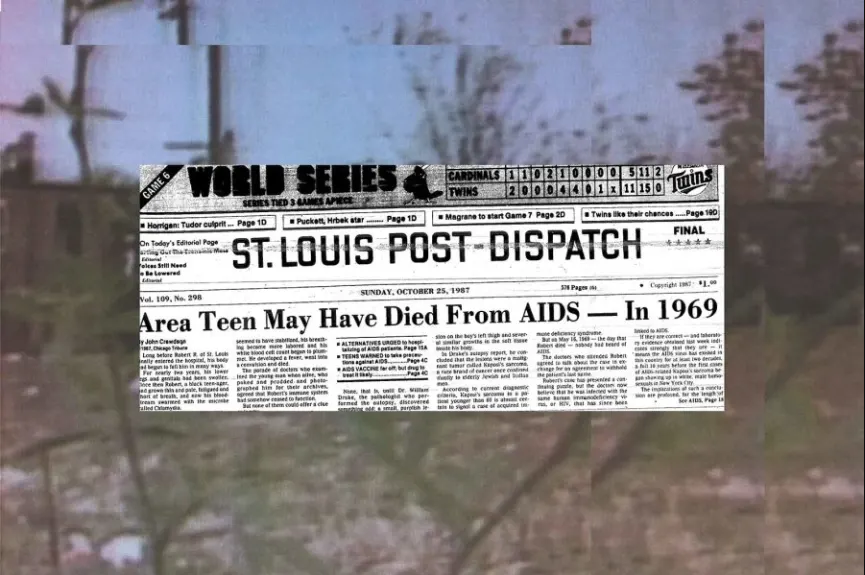
Image courtesy of Theodore (ted) Kerr
1981
New York City Statistics:
165 cumulative AIDS diagnoses
74 deaths
May 18: Lawrence Mass becomes the first journalist to write about the epidemic in the New York Native, a gay newspaper. The headline reads: “Disease Rumors Largely Unfounded.” Mass repeated a New York City public health official's claims that there was no wave of disease sweeping through the gay community. At this point, however, the Centers for Disease Control (CDC) had been gathering information for about a month on the outbreak that Mass's source dismissed.
June 5: The CDC’s Morbidity and Mortality Weekly Report (MMWR) publishes a report by Dr. Michael Gottlieb of five cases of Pneumocystis carinii pneumonia in gay men in Los Angeles.
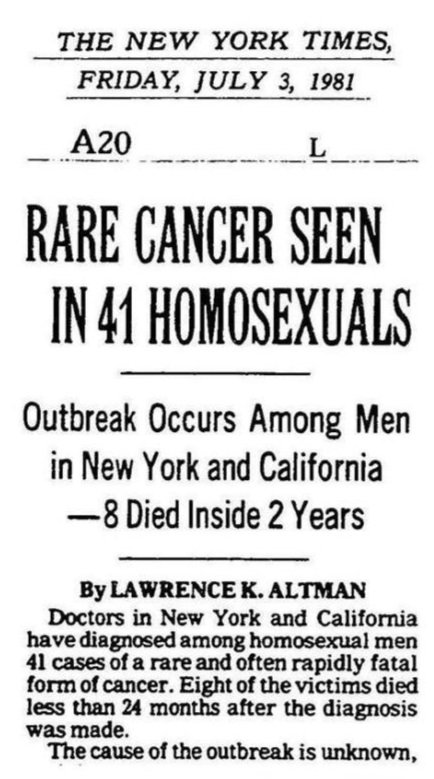
July 3: The MMWR reports 26 cases of Kaposi’s sarcoma (KS) in gay men in NYC and California. On the same day, the New York Times publishes its first mainstream article on the mysterious disease: “Rare Cancer Seen in 41 Homosexuals.”
Late 1981: The term GRID (Gay-Related Immune Deficiency) begins to circulate in the media, mistakenly linking the virus inherently to homosexuality.
August 11: Acclaimed writer and film producer Larry Kramer hosts a meeting of 80 men in his NYC apartment. Dr. Alvin Friedman-Kien speaks on the need for research funding. The group raised $6,635—the primary funds raised for the cause that year.
Year-End Total: 337 reported cases in the U.S. (321 adults, 16 children); 130 deaths recorded by December 31.
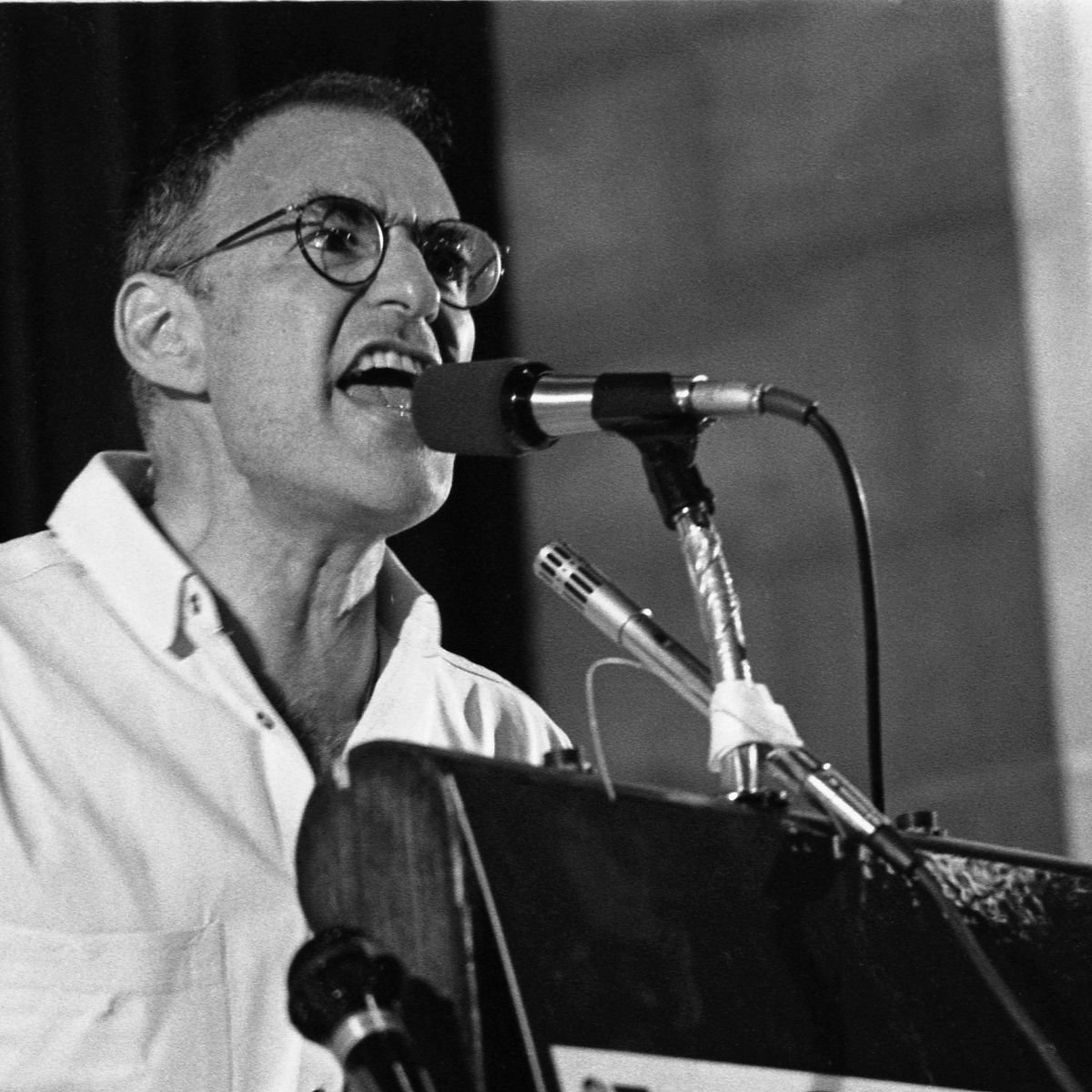
Larry Kramer, pictured here in 1987.
1982
New York City Statistics:
598 cumulative AIDS diagnoses
272 deaths
January: Gay Men's Health Crisis (GMHC) is founded in NYC by Larry Kramer, Nathan Fain, Lawrence Mass, and others. It becomes the first community-based AIDS service organization in the world. In May, volunteer Rodger McFarlane sets up a GMHC information and counseling hotline on his home phone—he receives 100 phone calls from worried gay men the first night.
June: The CDC reports a cluster of cases among gay men in Southern California, suggesting for the first time that the cause may be an infectious agent.
July: The first cases of the disease are reported in people with hemophilia and recipients of blood transfusions, suggesting the “agent” is blood-borne.
September 24: The CDC uses the term “AIDS” (Acquired Immune Deficiency Syndrome) for the first time, defining it as a disease at least moderately predictive of a defect in cell-mediated immunity and identifies four “risk factors”: male homosexuality, intravenous drug use, Haitian origin, and hemophilia A.
December 10: The CDC reports the first case of AIDS in a child who received blood transfusions, further confirming blood-borne transmission.
Pioneering Hi NRG musician Patrick Cowley dies of AIDS-related illness. Hibiscus (George Harris), a flamboyant performance artist and the founder of the gender-fluid theater troupe the Cockettes, dies of AIDS-related illness.
Year-End Total: 1,181 reported cases in the U.S.; 447 deaths

Patrick Cowley

Hibiscus
1983
New York City Statistics:
1,450 cumulative AIDS diagnoses
702 deaths
March: The CDC warns that blood and sexual contact are the primary transmission routes, advising “high-risk” groups not to donate blood.
April: Dr. Françoise Barré-Sinoussi and colleagues at the Pasteur Institute in Paris discover a retrovirus they call LAV (Lymphadenopathy-Associated Virus), later known as HIV.
April: The AIDS Medical Foundation (AMF) is founded by Dr. Mathilde Krim, Dr. Joseph Sonnabend, Michael Callen, and others. Based in New York City, it is the first private organization in the world dedicated to funding scientific and medical research on AIDS.In 1985, AMF would merge with Elizabeth Taylor’s National AIDS Research Foundation to become amfAR.
June: The Denver Principles are authored by People with AIDS (PWAs) at a conference in Denver, asserting their right to be at the table for all policy and treatment decisions. This is the birth of the PWA self-empowerment movement.
June: The first AIDS Candlelight Vigil is held in NYC to honor those lost.
Summer: Dr. Sonnabend sues to stop the eviction of his medical practice in NYC, marking the first AIDS discrimination lawsuit in the U.S.
Larry Kramer publishes a blistering assessment of the impact of AIDS on the gay community in the New York Native. The essay, “1,121 and Counting,” is a frantic plea for that community to get angry at the lack of government support for sick and dying gay men and the slow pace of scientific progress in finding a cause for AIDS.
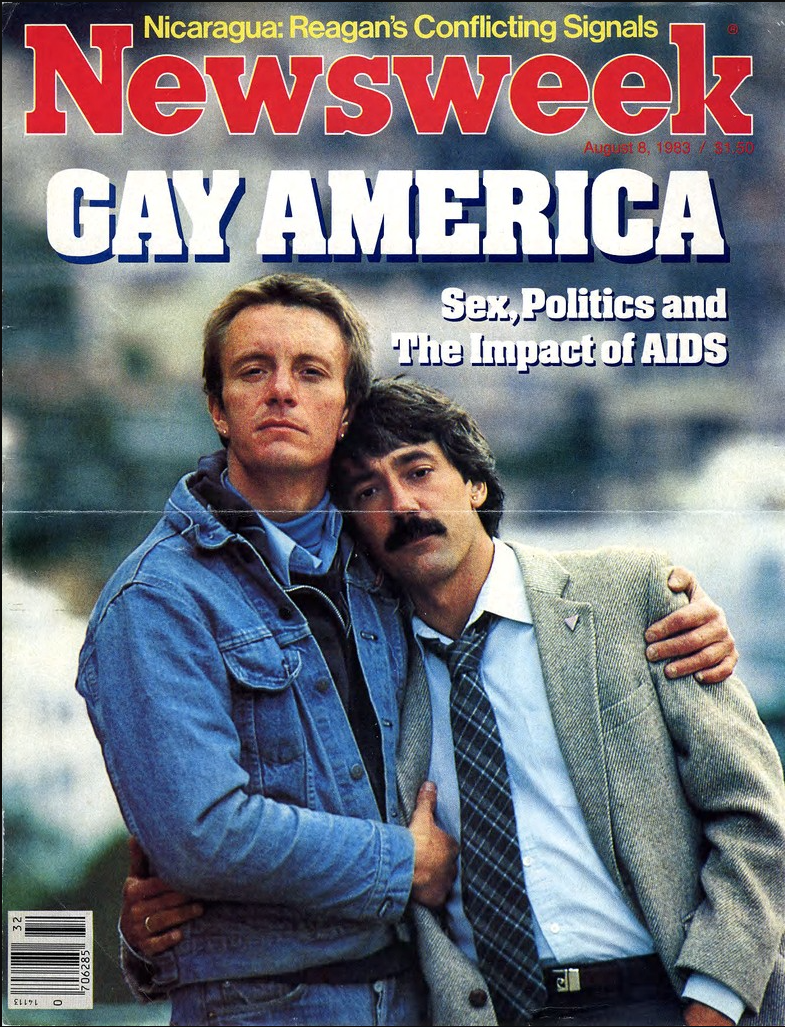
AIDS activist Bobbi Campbell appears with his partner, Bobby Hilliard, on the cover of Newsweek magazine for the story, “Gay America: Sex, Politics, and the Impact of AIDS.” It is the first time two gay men are pictured embracing one another on the cover of a U.S. mainstream national magazine.
AIDS cases have now been reported in 33 countries.
Musician Klaus Nomi dies of AIDS-related illness.
Year-End Total: 3,064 reported cases in the U.S.; 1,292 deaths


Klaus Nomi
1984
New York City Statistics:
2,933 cumulative AIDS diagnoses
1,556 total deaths
April 23: U.S. Department of Health and Human Services Secretary Margaret Heckler announces that Dr. Robert Gallo and his colleagues at the National Cancer Institute have found the cause of AIDS, a retrovirus they have labeled HTLV-III. Heckler also announces the development of a diagnostic blood test to identify HTLV-III and famously (and inaccurately) predicts a vaccine will be ready in two years.
July 16: A massive protest of over 100,000 people—led largely by the gay community and AIDS activists—marched past the Moscone Center during the Democratic National Convention in San Francisco. It was the first time the epidemic was forced into the peripheral vision of a national political convention.
October: The city of San Francisco orders the closure of gay bathhouses; similar debates erupt in NYC regarding public health versus civil liberties.
Rep. Henry Waxman leads the charge to allocate the first significant federal funds specifically for AIDS research ($61 million), despite resistance from the Reagan administration.
Philosopher Michel Foucault dies of AIDS-related illness. Activist Bobbi Campbell dies of AIDS-related illness.
Year-End Total: 7,239 reported cases in the U.S.; 3,465 deaths
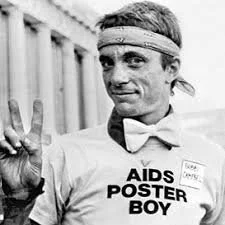
Bobbi Campbell, Photo courtesy of ITVS.

Margaret Heckler
1985
New York City Statistics:
5,190 cumulative AIDS diagnoses
2,990 total deaths
March 2: The federal government licenses an HIV antibody test, and screening of the U.S. blood supply begins.
April 15–17: The first International AIDS Conference is held in Atlanta.
July: Ryan White, a 13-year-old hemophiliac with AIDS, is barred from school in Indiana.
August: The U.S. Department of Defense announced it will begin testing all recruits for HIV and will reject those who test positive.
September 17: President Ronald Reagan mentioned AIDS publicly for the first time, calling it “a top priority” and defending his administration against criticisms that funding for AIDS research is inadequate.
Ricky Wilson of the B-52s dies of AIDS-related illness. Actor Rock Hudson dies of AIDS-related illness at age 59. In his will, Hudson leaves $250,000 to support the establishment of the American Foundation for AIDS Research (amfAR). Actress Elizabeth Taylor serves as the organization’s founding National Chairman.
Year-End Total: 15,527 reported cases in the U.S.; 8,161 deaths. AIDS has now been reported in 51 countries and on every continent except Antarctica.

Rock Hudson pictured with Doris Day

Ricky Wilson of the B-52s
1986
New York City Statistics:
8,416 cumulative AIDS diagnoses
5,291 total deaths
January 13: The CDC releases a year-end report for 1985 showing that more people were diagnosed with AIDS in 1985 than in all previous years combined. The figures reveal an 89% increase in new cases over 1984. The report notes that 51% of adults and 59% of children diagnosed to date have died, with an average survival time of 15 months post-diagnosis. Experts predict a doubling of cases in 1986.
February: In West Africa, a second type of the virus, HIV-2, is discovered in commercial sex workers by researchers from the Pasteur Institute and the University of Dakar. It is later found to cause a similar but slower-progressing form of AIDS.
February: The National Institutes of Health (NIH) begins planning the formation of the AIDS Clinical Trials Group (ACTG). This network becomes the largest HIV clinical trials organization in the world, designed to accelerate the testing of new treatments.
February 24: The NIH initiates the first controlled efficacy trial of AZT (zidovudine). The double-blind, placebo-controlled study is designed to see if the drug can safely stop the virus from replicating in humans.
October 22:U.S. Surgeon General C. Everett Koop releases his “Surgeon General’s Report on Acquired Immune Deficiency Syndrome.” He calls for a nationwide education campaign, early sex education in schools, increased use of condoms, and voluntary testing. Crucially, the report emphasizes that HIV cannot be spread casually, a vital message in combating public hysteria.
October 29: The Institute of Medicine (IOM) and the National Academy of Sciences release a comprehensive report titled “Confronting AIDS.” The report states that $2 billion is needed annually for research and care and criticizes the federal government for its “fragmented” response to the epidemic.
Designer Perry Ellis dies of AIDS-related illness. Jerry Smith dies of AIDS-related illness. Model Gia Carangi dies of AIDS-related illness.
Year-End Total: 28,712 reported cases in the U.S.; 16,134 deaths.

Gia Carangi © 2003 The Gia Carangi Foundation. Photography by Francesco Scavullo

Perry Ellis
1987
New York City Statistics:
12,561 cumulative AIDS diagnoses
8,442 total deaths
February: AIDS activist Cleve Jones (pictured top with Gert McMullin) created the first panel of the AIDS Memorial Quilt to honor his friend Marvin Feldman, who died on October 10, 1986, of AIDS-related illness at age 33. The quilt panels are 3 feet wide by 6 feet long—the size and shape of a typical grave plot. On October 11, the Quilt is first displayed on the National Mall in Washington, D.C., transforming private grief into a public memorial.
March 12: Following a galvanizing speech by Larry Kramer at the LGBT Community Center in New York City, the AIDS Coalition to Unleash Power (ACT UP) is formed. Rather than a traditional organization with a single founder, ACT UP is established as a non-partisan, leaderless, direct-action group. TIME Magazine would go on to call ACT UP “the most effective health activist [group] in history” for “pressuring drug companies, government agencies and other powers that stood in their way to find better treatments for people with AIDS — and, in the process, improving the way drugs are tested and approved in the U.S.”
March 19: Approved in record time, zidovudine (AZT) became the first anti-HIV drug approved by the Food and Drug Administration (FDA). (At $10,000 for a one-year supply, AZT is the most expensive drug in history.)
March 24: ACT UP’s first protest on Wall Street; 17 people are arrested.
Debra Fraser-Howze, director of teenage services at the Urban League of New York, founds the National Black Leadership Commission on AIDS. The organization works to educate, mobilize, and empower black leaders to meet the challenge of fighting HIV/AIDS and other health disparities in their local communities.
And the Band Played On, a history of the AIDS epidemic by reporter Randy Shilts, is published.
The U.S. government bars HIV-positive immigrants and travelers from entering the country.
The Food and Drug Administration allows condom-makers to advertise the fact that latex condoms can help prevent the transmission of HIV and other sexually transmitted diseases.
The CDC expands its definition of AIDS to include wasting syndrome and dementia.
Photographer Peter Hujar dies of AIDS-related illness. Michael Bennett dies of AIDS-related illness. Liberace dies of AIDS-related illness. Fashion designer Willi Smith dies of AIDS-related illness. Gay Games founder Tom Waddell dies of AIDS-related illness.
Year-End Total: 50,378 reported cases in the U.S.; 28,170 deaths.
AIDS Memorial Quilt co-founders Cleve Jones and Gert McMullin, 1987


Peter Hujar © The Peter Hujar Archive

Liberace, Photo: Allen Warren

Willi Smith
1988
New York City Statistics:
18,174 cumulative AIDS diagnoses
12,580 total deaths
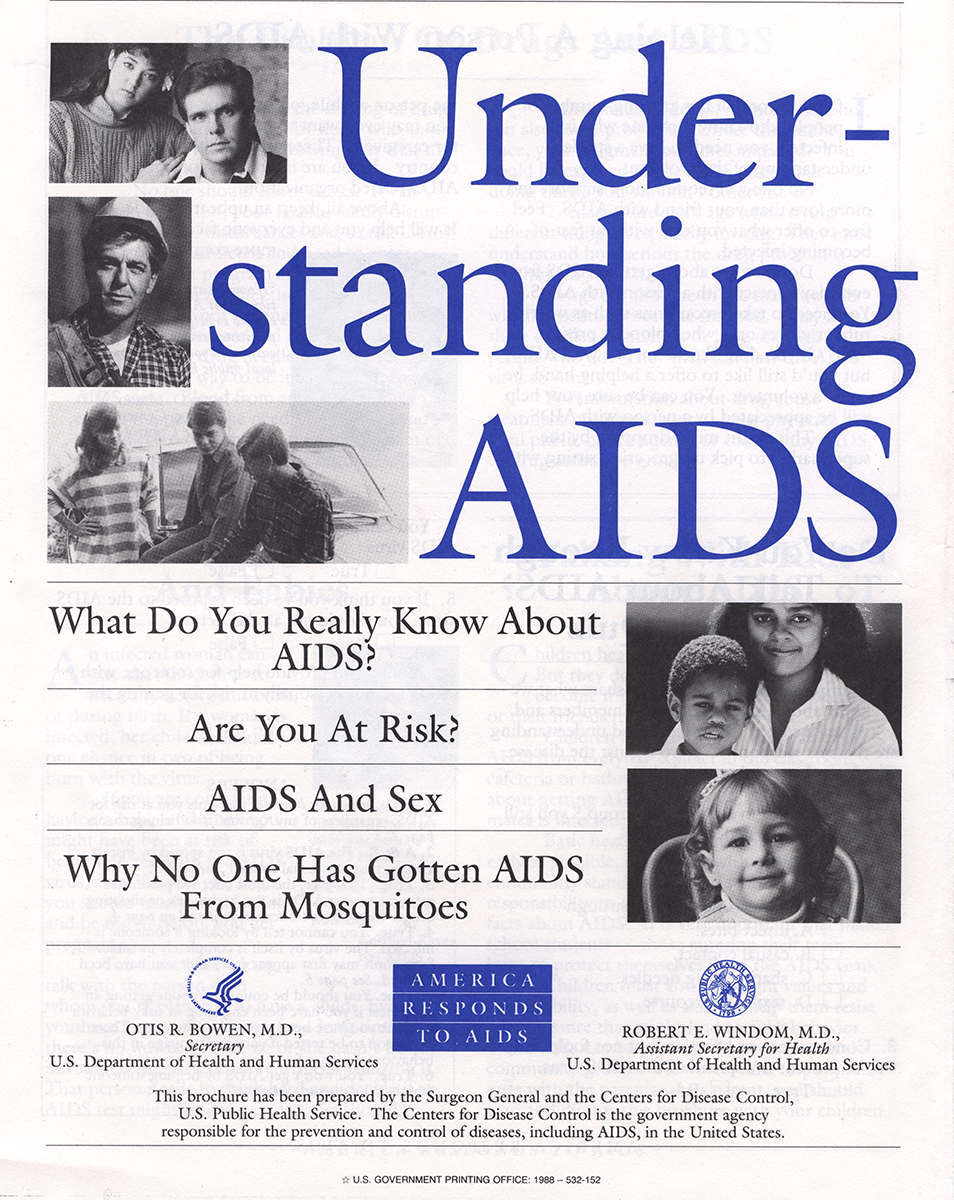
May-June: The federal government mails the educational pamphlet “Understanding AIDS” to 107 million homes nationwide. Prepared by Surgeon General C. Everett Koop and the CDC, this remains the largest public health mailing in U.S. history.
August: amfAR funds the nation’s first research to evaluate the effectiveness of pilot needle exchange programs in San Francisco and Portland, Oregon. These studies provided the first clinical evidence that making sterile syringes available significantly reduced HIV transmission rates among injection drug users.
September: Anthony Fauci, M.D., is named the first associate director (and acting director) of the NIH’s newly established Office of AIDS Research (OAR). This office was created to coordinate the massive increase in HIV research across all NIH institutes.
October 11: ACT UP organizes its most successful direct-action protest to date at FDA headquarters in Rockville, Maryland. Under the slogan “Seize Control of the FDA,” approximately 1,500 activists successfully shut down the facility for a day, protesting the slow pace of drug approval.
November 4: Congress passes the HOPE Act of 1988 (part of the Health Omnibus Programs Extension). This is the first comprehensive federal AIDS legislation, authorizing increased funding for research, testing, and community-based services.
November 7: New York City’s Health Department begins an experimental needle exchange program. For the first time in NYC, data showed that new AIDS cases resulting from shared needles exceeded those attributable to sexual contact, prompting Commissioner Stephen Joseph to push through the pilot program despite intense political opposition.
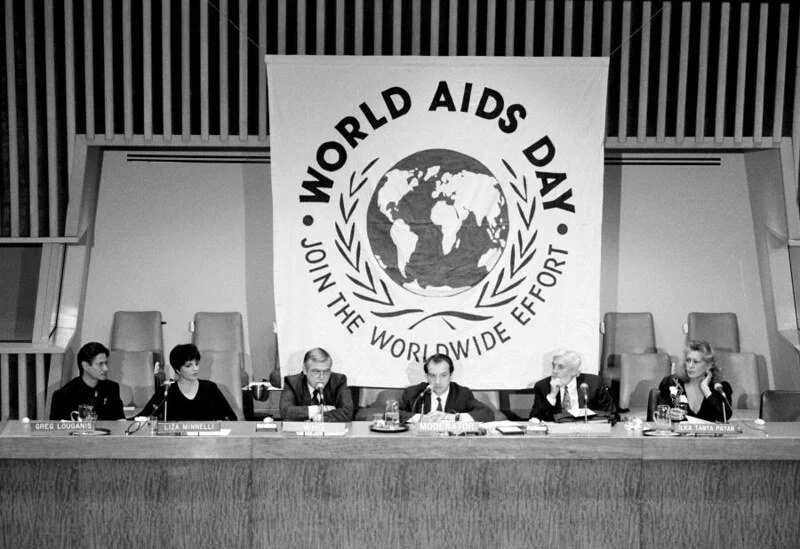
December 1: World AIDS Day is observed for the first time. Designated by the World Health Organization and supported by the United Nations, the inaugural theme is “Join the Worldwide Effort.”
Disco legend Sylvester dies of AIDS-related illness. Wayland Flowers dies of AIDS-related illness. Artist Paul Thek dies of AIDS-related illness. Choreographer Arnie Zane (pictured with Bill T. Jones) dies of AIDS-related illness.
Year-End Total: 82,764 reported cases in the U.S.; 46,134 deaths.
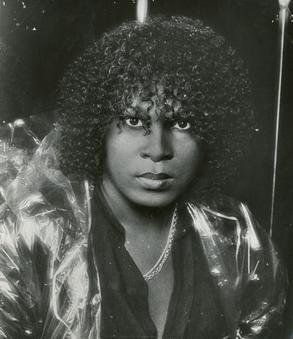
Sylvester

Bill T. Jones (left) and Arnie Zane (right)
1989
New York City Statistics:
24,530 cumulative AIDS diagnoses
17,597 total deaths
June 15: The FDA grants marketing approval for Nebupent (aerosolized pentamidine), a new method of preventing Pneumocystis carinii pneumonia (PCP). This was a major victory for the community-based clinical trials (CBCT) movement, which had conducted much of the pilot research outside of traditional academic settings.
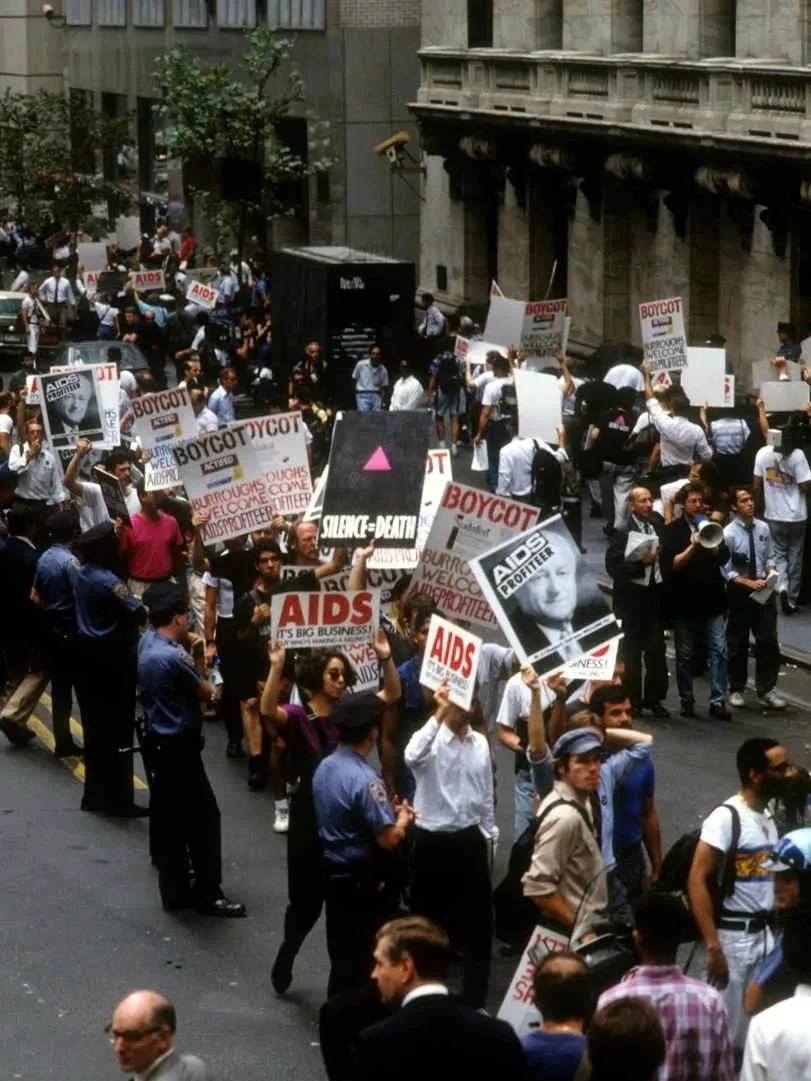
September 14: In an action titled “Trade in AIDS,” members of ACT UP successfully infiltrate the New York Stock Exchange. Protesters chain themselves to the VIP balcony and drop fake $100 bills onto the trading floor to protest the high cost of AZT. The opening bell is disrupted for the first time in history. Four days later, Burroughs Wellcome lowers the price of the drug by 20%.
September 18: The U.S. Congress creates the National Commission on AIDS. The Commission meets for the first time.
December 1: Visual AIDS organizes the first “Day Without Art” to coincide with the second annual World AIDS Day. Hundreds of arts institutions across NYC, including the Metropolitan Museum of Art and MoMA, shroud artworks in black, dim their lights, or close their doors to symbolize the “growing absence” of artists lost to the epidemic.
December 10: Over 5,000 activists participate in the “Stop the Church” protest at St. Patrick's Cathedral. Organized by ACT UP and WHAM! (Women's Health Action and Mobilization), the demonstration targets Cardinal John O'Connor for the Church’s opposition to condom distribution and safer sex education. 111 people are arrested, including dozens who enter the cathedral and stage a “die-in” in the aisles during Mass.
Photographer Robert Mapplethorpe dies of AIDS-related illness. Photographer Mark Morrisroe dies of AIDS-related illness. Choreographer Alvin Ailey dies of AIDS-related illness. Actress and author Cookie Mueller dies of AIDS-related illness.
Year-End Total: 115,786 reported cases in the U.S.; 70,313 deaths.
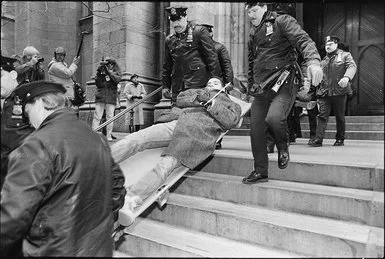
Stop the Church action © Brian Palmer, 1989

Robert Mapplethorpe © The Robert Mapplethorpe Foundation
1990
New York City Statistics:
31,732 cumulative AIDS diagnoses
23,105 total deaths
June 20–24: The VI International AIDS Conference is held in San Francisco. It is marked by a massive boycott by over 80 domestic and international organizations to protest the U.S. government's “HIV Travel Ban,” which prohibited HIV-positive visitors from entering the country. ACT UP and other groups hold a parallel conference in the streets to center the voices of people living with the virus.
July 26: President George H.W. Bush signs the Americans with Disabilities Act (ADA) into law. The landmark civil rights legislation protects individuals with disabilities from discrimination, explicitly including both people living with HIV/AIDS and those “perceived” to be HIV-positive.
August 18: Congress enacts the Ryan White Comprehensive AIDS Resources Emergency (CARE) Act. In its first year, it provides $220.5 million in federal funds for community-based care and treatment. Managed by HRSA, it becomes the largest HIV-specific federal grant program in the U.S.
CDC Year-End Report: National surveillance data reveals a devastating trend: while Black and Latina women constitute only 19% of the U.S. female population, they represent 72% of all women diagnosed with AIDS, highlighting the systemic inequities in healthcare access and prevention.
NYC Policy Change: Under Mayor David Dinkins, NYC officially increases the budget for the AIDS Services Administration (ASA), though activists continue to protest that the city’s housing and support systems for homeless New Yorkers with AIDS remain critically underfunded.
Ryan White dies of AIDS-related illness. Artist Keith Haring dies of AIDS-related illness. Fashion designer Halston dies of AIDS-related illness. Photographer Tseng Kwong Chi dies of AIDS-related illness. Performer Ethyl Eichelberger dies of AIDS-related illness. Author and activist Vito Russo dies of AIDS-related illness.
Year-End Total: 161,073 reported cases in the U.S.; 100,813 deaths. To date, nearly twice as many Americans have died of AIDS-related causes as died in the Vietnam War.

Ryan White
Keith Haring

Vito Russo
1991
New York City Statistics:
39,573 cumulative AIDS diagnoses
29,540 total deaths
Spring: The Visual AIDS Artists Caucus comes together in New York City to create a visual symbol of compassion. Inspired by the yellow ribbons for soldiers in the Gulf War, they choose red to symbolize blood and passion.
June 2: The Red Ribbon makes its international debut at the 45th Annual Tony Awards at the Minskoff Theatre in NYC. Host Jeremy Irons and other celebrities wear the ribbon, sparking immediate media curiosity. Designed as a “copyright-free” symbol, it quickly becomes the global icon for AIDS awareness and solidarity.
June 7: The CDC releases a report marking the first ten years of the epidemic, estimating that one million Americans are now HIV-positive. The report notes that AIDS has become the second leading cause of death among men aged 25–44.
August: The World Health Organization (WHO) estimates that nearly 10 million people are living with HIV worldwide, emphasizing that the pandemic is accelerating rapidly in sub-Saharan Africa and South Asia.
October 28: Congress enacts the Housing Opportunities for People with AIDS (HOPWA) Act of 1991 (as part of the Cranston-Gonzalez National Affordable Housing Act). This remains the only federal program solely dedicated to the housing needs of people living with HIV/AIDS, recognizing that stable housing is a cornerstone of medical care.
November 7: Basketball legend Earvin “Magic” Johnson stuns the world by announcing at a televised press conference that he has tested positive for HIV and is retiring from the Los Angeles Lakers. His disclosure is credited with fundamentally shifting the public perception that HIV only affected “marginalized” groups, leading to a massive surge in people seeking HIV testing across the country.
Queen frontman Freddie Mercury dies of AIDS-related illness. Composer Howard Ashman dies of AIDS-related illness.
Year-End Total: 206,392 reported cases in the U.S.; 133,233 deaths.
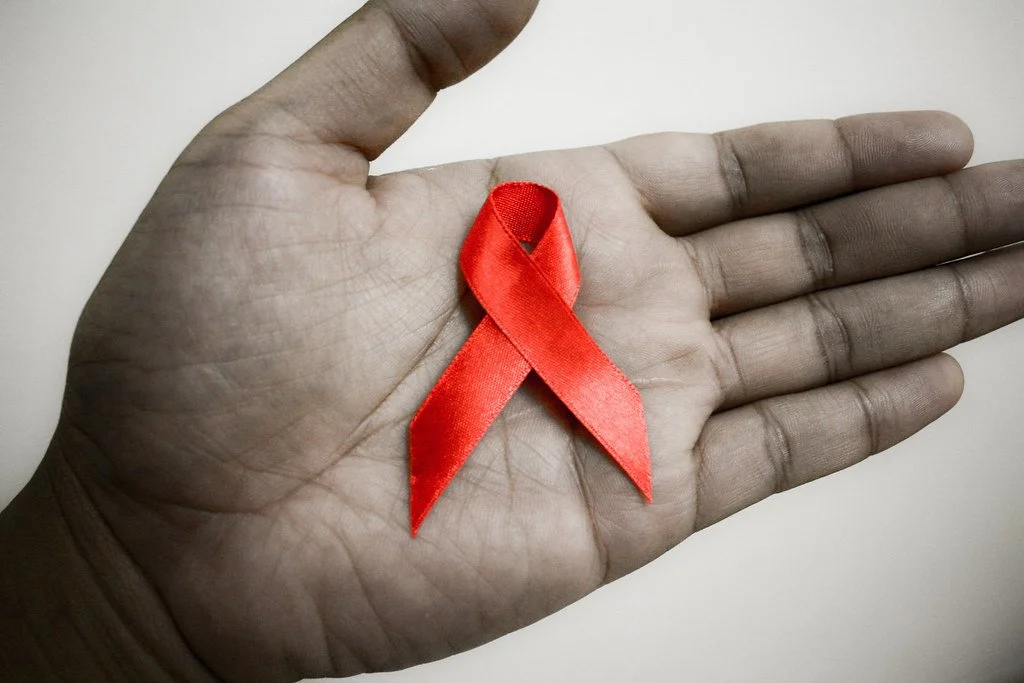
Photo: Sham Hardy

Magic Johnson

Freddie Mercury
1992
New York City Statistics:
49,606 cumulative AIDS diagnoses
37,344 total deaths
In a major shift for national politics, HIV-positive women address both major party conventions. On July 14, Elizabeth Glaser (who contracted HIV from a blood transfusion and unknowingly passed it to her children) delivers a landmark speech at the Democratic National Convention in NYC. On August 19, Mary Fisher delivers her “A Whisper of AIDS” speech at the Republican National Convention in Houston. The New York Times later credits them with “bringing AIDS home to America” by breaking the stereotype of who could be affected.
October 11: ACT UP holds one of its most visceral protests. Mourners and activists carry the cremated remains of their loved ones to Washington, D.C., and scatter them over the White House fence onto the lawn, demanding that President Bush acknowledge the humanity of those who had died.
FDA Accelerated Approval: In response to years of activist pressure, the FDA issues new rules (Subpart H) allowing for the accelerated approval of AIDS drugs. This allows medications to be approved based on “surrogate markers”—such as an increase in CD4 cell counts—rather than waiting years for long-term clinical outcomes like survival rates.
Combination Therapy Trials: The first clinical trials for combination antiretroviral therapy (using two drugs instead of one) begin. Early data shows that combining AZT with newer drugs like ddC (zalcitabine) is significantly more effective than monotherapy at slowing the progression of the disease.
Artist David Wojnarowicz dies of AIDS-related illness. Both Alison Gertz, a young, affluent, New Yorker who shared her story of becoming HIV+ in 1989 and later became an AIDS activist, speaking with teenagers on the subject of safe sex and founding the nonprofit Love Heals, and Katrina Haslip, an AIDS educator and activist who played an essential role in the campaign to change the criteria for government recognition of AIDS to include the symptoms uniquely experienced by women through co-founding AIDS Committee for Education (ACE) for women incarcerated at Bedford Hills Correctional Facility for Women and its counterpart ACE-OUT for women leaving prison, both die of AIDS-related illness. Musician Arthur Russell dies of AIDS-related illness. Model and jewelry designer Tina Chow dies of AIDS-related illness. Actor Anthony Perkins dies of AIDS-related illness. Actor Robert Reed, famous for playing TV dad Mike Brady on The Brady Bunch, dies of AIDS-related illness. Florida teenager Ricky Ray dies of AIDS-related illness on December 13. The 15-year-old hemophiliac and his two younger brothers (pictured bottom) sparked a national conversation on AIDS after their court battle to attend school in their hometown of Arcadia, Florida, led to boycotts by residents and the torching of their home.
Year-End Total: 242,000 reported cases in the U.S.; 160,372 deaths.

Alison Gertz, Creator: Images Press | Credit: Getty Images
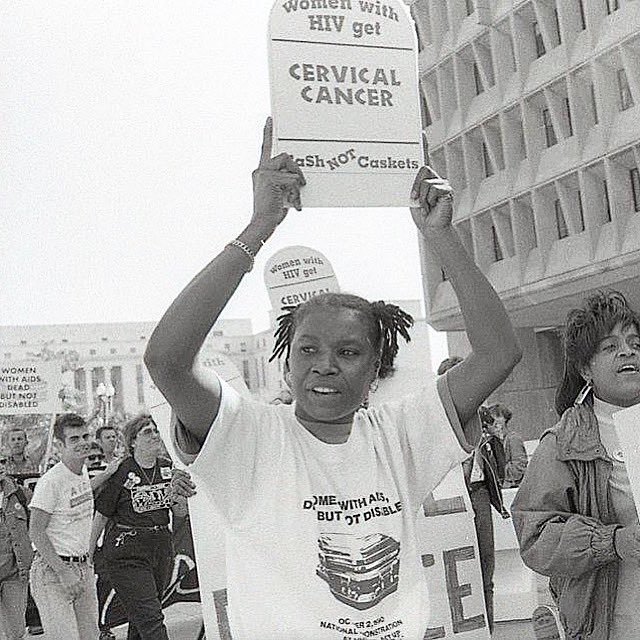
Katrina Haslip

Arthur Russell, By Atlantic

Ricky, Randy, and Robert Ray stand alone on a Florida beach. Photo by Mary Ellen Mark
1993
New York City Statistics:
62,810 cumulative AIDS diagnoses
46,878 total deaths
January 1: The CDC officially expands the clinical definition of AIDS. The new criteria include HIV-positive people with CD4 counts under 200, as well as those with pulmonary tuberculosis, recurrent pneumonia, or invasive cervical cancer. This change is monumental for women, as it finally recognizes female-specific manifestations of the disease, leading to a surge in documented cases among women.
April: preliminary results of the three-year Anglo-French Concorde Study are released. The study finds no evidence that AZT delays the onset of AIDS in asymptomatic HIV-positive individuals. This news is a devastating blow to patients and doctors who had relied on early AZT intervention as the primary standard of care.
AZT Resistance: Clinical data begins to show that many AIDS patients are developing resistance to AZT after long-term use. This underscores the urgent need for new drug classes and combination therapies, as monotherapy (using a single drug) is proving insufficient to keep the virus suppressed.
White House Office of National AIDS Policy: Recognizing the need for a coordinated federal response, President Bill Clinton establishes the White House Office of National AIDS Policy (ONAP). He appoints Kristine Gebbie as the first “AIDS Czar” to oversee federal efforts across agencies.
May: The FDA approves the “Reality” female condom for sale in the U.S. It is the first barrier method controlled entirely by women that offers protection against both unintended pregnancy and sexually transmitted diseases, including HIV.
Tom Hanks (pictured in character) wins an Oscar for his role as a gay man with AIDS in the film “Philadelphia.” “Angels in America,” Tony Kushner’s play about AIDS, wins the Tony Award for Best Play and the 1993 Pulitzer Prize for Drama.
Tennis legend Arthur Ashe dies of AIDS-related illness. Ballet dancer Rudolf Nureyev dies of AIDS-related illness. Activist and singer Michael Callen dies of AIDS-related illness.
Year-End Total: 361,164 reported cases in the U.S.; 220,592 deaths.For the first time in major U.S. urban centers, sexual transmission surpasses injection drug use as the leading cause of new HIV infections among women.

Tom Hanks in Philadelphia


Michael Callen, 1987 photo by Robert Giard
1994
New York City Statistics:
76,158 cumulative AIDS diagnoses
56,846 total deaths
February: The NIH-funded Pediatric AIDS Clinical Trials Group (PACTG) 076 trial is halted early because the results are so successful. The study demonstrates that giving AZT to pregnant women and their newborns reduces the risk of mother-to-child transmission by two-thirds (from 25% down to 8%). This remains one of the most significant victories in the history of the epidemic.
Researchers David Ho and George Shaw publish landmark papers in Nature showing that HIV does not have a “dormant” period. Instead, from the moment of infection, the virus replicates at a staggering rate, producing billions of copies every single day. This discovery fundamentally shifts the treatment strategy toward “hit hard, hit early.”
The CDC confirms that AIDS has officially become the leading cause of death for all Americans ages 25 to 44. The epidemic is no longer a “niche” crisis; it is the primary killer of young adults in the United States.
December 9: Surgeon General Joycelyn Elders—the first Black woman to hold the post—is forced to resign by President Clinton. A tireless advocate for frank AIDS education, her departure follows a controversial comment at a UN World AIDS Day conference suggesting that masturbation should perhaps be taught as a form of safer sex to prevent the spread of HIV.
Elizabeth Glaser dies of AIDS-related illness. Randy Shilts dies of AIDS-related illness. Leigh Bowery dies of AIDS-related illness. Derek Jarman dies of AIDS-related illness. Felix Partz and Jorge Zontal, two-thirds of the Canadian art collective General Idea who created the iconic work AIDS, die of AIDS-related illness. 22-year-old Pedro Zamora dies of AIDS-related complications. As a cast member on MTV's The Real World: San Francisco, Pedro brought the reality of living with HIV into the living rooms of millions of young people. President Clinton publicly praised him for “giving the AIDS epidemic a human face.”
Year-End Total: 441,528 reported cases in the U.S.; 270,533 deaths. Over 8,000 New Yorkers died of AIDS-related causes in 1994 alone.
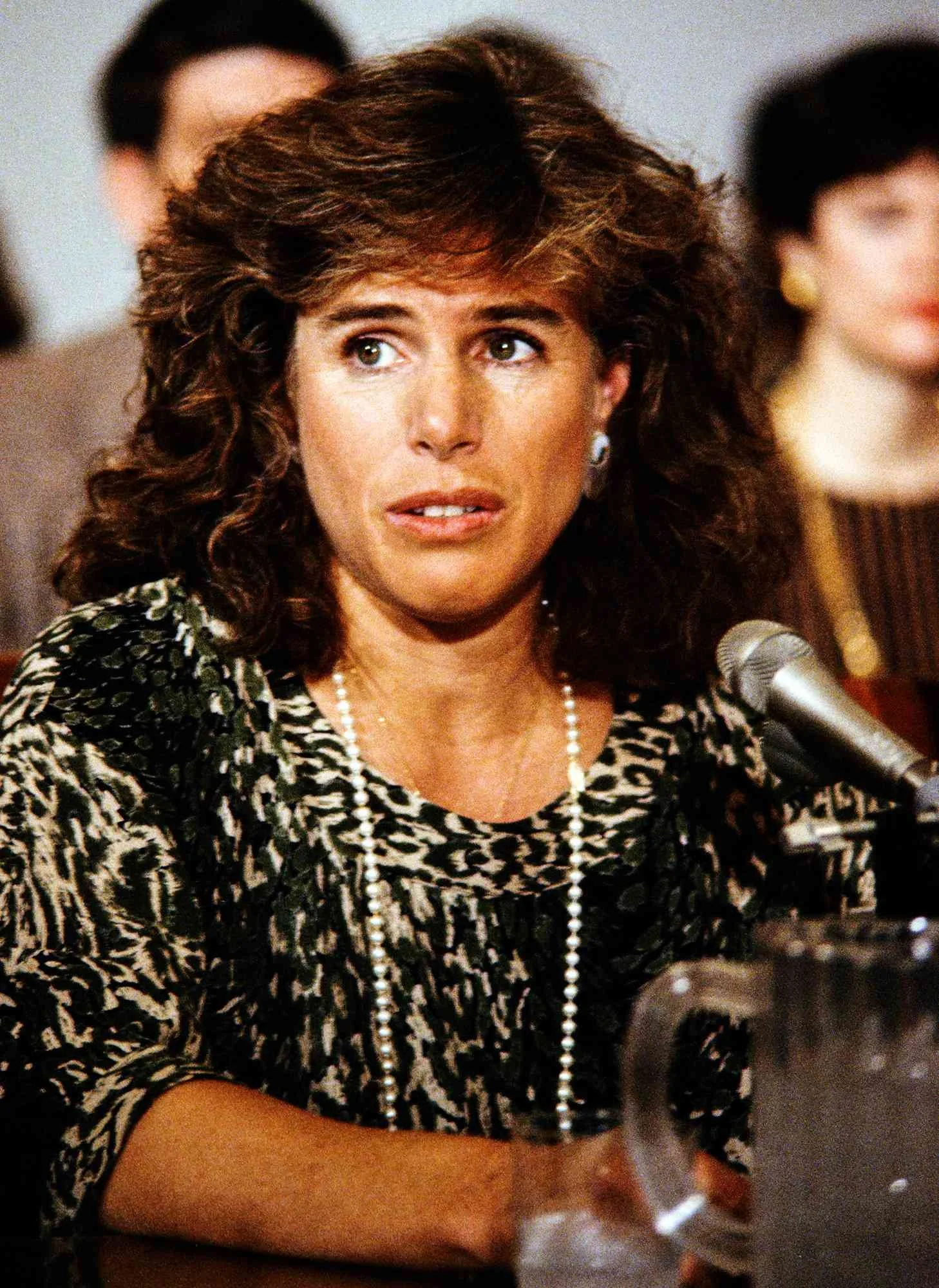
Elizabeth Glaser

General Idea, AIDS, 1987, © 2022 General Idea
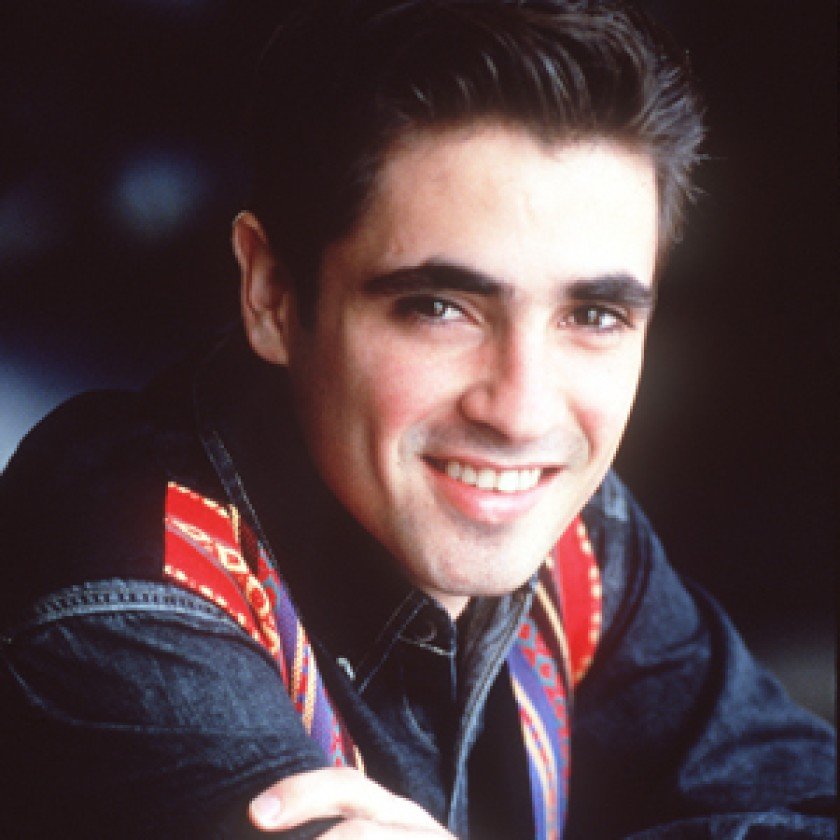
Pedro Zamora
1995
New York City Statistics:
87,838 cumulative AIDS diagnoses
65,302 total deaths
December 6: The FDA approves Invirase (saquinavir), the first protease inhibitor. This new class of drugs, when used in combination with older medications like AZT, ushers in the era of Highly Active Antiretroviral Therapy (HAART). The clinical trial results are so overwhelming that the drug is approved in just 97 days, the fastest in FDA history.
June 27: President Clinton issues an executive order establishing the President’s Advisory Council on HIV/AIDS (PACHA). The council is formed to provide the White House with independent advice on the federal response to the epidemic.
June 27: The National Association of People with AIDS (NAPWA) launches the first National HIV Testing Day, emphasizing the importance of early detection as new treatments begin to emerge.
Between 1991 and 1995, the number of American women diagnosed with AIDS increases by 63%. For the first time, Black and Hispanic women represent more than three-quarters of all women diagnosed with AIDS, highlighting a growing crisis in communities of color.
Rapper Eric Lynn Wright (known as Eazy-E) dies of AIDS-related illness. Paul Monette dies of AIDS-related illness. Greg Louganis, the Olympic gold medal diver, discloses that he is HIV-positive.
Year-End Total: 513,486 reported cases in the U.S.; 319,849 deaths. On October 31, the CDC reports that the total number of AIDS cases in the U.S. has reached 500,000.

Eazy-E

Paul Monette
1996
New York City Statistics:
96,162 cumulative AIDS diagnoses
70,551 total deaths
July: The XI International AIDS Conference in Vancouver marks a historical turning point. Researchers announce that Combination Therapy (using three drugs from different classes) can suppress HIV to “undetectable” levels. This transforms HIV for many into a manageable chronic condition.
Dr. David Ho publishes research advocating for aggressive early intervention. His strategy, “hit hard, hit early,” aims to prevent the virus from establishing a reservoir in the body. For his leadership, Dr. Ho is named TIME Magazine’s “Man of the Year.”
The FDA approves the first viral load test, which measures the actual amount of HIV in a patient's blood. This becomes the “gold standard” for monitoring whether treatment is working, shifting the focus from simply counting immune cells (CD4) to measuring the virus itself.
For the first time in U.S. history, the proportion of AIDS cases among African Americans (41%) surpasses that of whites (38%), highlighting the urgent need for racially equitable healthcare access.
The Lancet publishes a four-year study of New York City syringe exchange programs, proving that these programs reduce HIV transmission by two-thirds without increasing drug use. This provides the definitive scientific evidence to support harm reduction in NYC.
October: the AIDS Memorial Quilt is displayed in its entirety for the last time on the National Mall in Washington, D.C. It covers the entire expanse from the Capitol to the Washington Monument, containing over 40,000 panels.
UNAIDS Established: To coordinate a global response to a pandemic that has now infected an estimated 22.6 million people, the Joint United Nations Programme on HIV/AIDS (UNAIDS) is officially launched.The 1996 International AIDS Conference in Vancouver marks a turning point as combination therapy transforms HIV from a fatal diagnosis into a manageable chronic condition for many with access to treatment.
Artist Félix González-Torres dies of AIDS-related illness.
Year-End Total: 581,429 reported cases in the U.S.; 362,004 deaths.The number of Americans dying from AIDS-related causes drops by 23% compared to the previous year. The U.N. estimates that 22.6 million people are HIV-positive and 6.4 million people have died of AIDS-related causes worldwide.

AIDS Memorial Quilt Display, Washington, DC, 1996. Photo: National Institutes of Health
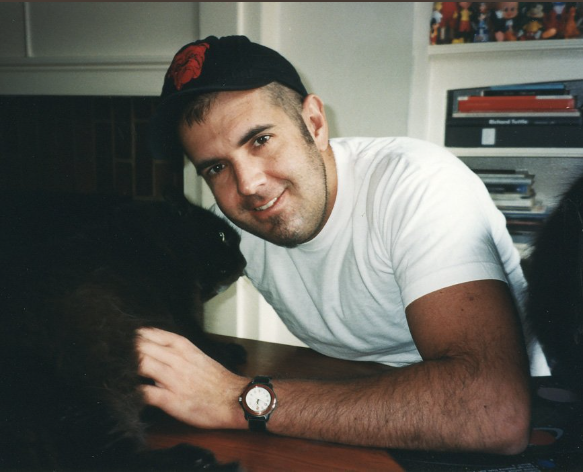
Félix González-Torres
1997
New York City Statistics:
101,984 cumulative AIDS diagnoses
73,363 total deaths
May 18: During a commencement address at Morgan State University, President Bill Clinton challenges the scientific community to develop an AIDS vaccine within 10 years, comparing the effort to the 1960s mission to reach the moon. This leads to the establishment of the Dale and Betty Bumpers Vaccine Research Center at the NIH.
Despite the miracle of the new drugs, the CDC reports a sobering statistic: the number of new HIV acquisitions in the U.S. has remained constant at approximately 40,000 per year since 1992. This highlights that while people are living longer, the prevention methods of the era are not significantly reducing the spread of the virus.
September: The FDA approves Combivir, the first drug to combine two antiretroviral medications (AZT and 3TC) into a single pill. This is a major milestone in “pill burden” reduction, making it easier for patients to stick to their demanding treatment schedules.
HAART Side Effects: As patients live longer on the “cocktails,” doctors begin to report the first significant long-term side effects, including lipodystrophy (the redistribution of body fat) and metabolic issues, signaling that while the drugs save lives, they come with a high physical cost.
Nigerian musician, bandleader, composer, and father of Afrobeat, Fela Anikulapo-Kuti dies of AIDS-related illness.
Year-End Total: 641,086 reported cases in the U.S.; 390,692 deaths. For the first time in the history of the epidemic, the number of Americans dying from AIDS-related causes drops by 42% in a single year. This massive shift is attributed entirely to the “triple cocktail” of protease inhibitors and antiretrovirals becoming the standard of care. NYC mirrors the national trend with a historic drop in annual deaths, as the “Lazarus Effect” of the previous year becomes a widespread reality across the five boroughs.

Fela Anikulapo-Kuti
1998
New York City Statistics:
107,314 cumulative AIDS diagnoses
75,765 total deaths
In a pivotal moment for racial justice in healthcare, the Congressional Black Caucus (CBC) and other African American leaders are briefed on the catastrophic impact of the virus in their communities. They issue a “Call to Action,” successfully pressuring the Clinton Administration to declare a “State of Emergency” in the African American community and authorize a $156 million Minority AIDS Initiative.
HHS Secretary Donna Shalala formally determines that needle exchange programs are scientifically proven to prevent HIV transmission without encouraging drug use. Despite this endorsement, the Clinton Administration bows to political pressure and maintains the federal ban on funding for these programs, leaving NYC and other cities to fund their own harm-reduction efforts.
The early scientific hope that HAART could completely eradicate HIV from “reservoirs” in the body and provide a clinical cure begins to fade. Researchers realize that the virus can hide in a latent state, meaning patients must stay on medication indefinitely.
Researchers Jack Nunberg and Dan Littman develop a “fusion competent” vaccine concept. This approach, which focuses on blocking the virus at the moment it attempts to enter a human cell, becomes one of the most studied strategies in vaccine research.
American graffiti artist Donald Joseph White, known as DONDI, dies of AIDS-related illness.
Year-End Total: 688,200 reported cases in the U.S.; 410,800 deaths.AIDS-related deaths in the U.S. drop by another 21%. While significant, this is less than half the decline seen in 1997, leading scientists to warn that without new drug classes, the death rate may plateau.

DONDI, photo by Martha Cooper
1999
New York City Statistics:
112,654 cumulative AIDS diagnoses
78,054 total deaths
February 7: Launched as a grassroots education effort, the first NBHAAD is observed on February 7 to address the disproportionate impact of the epidemic on Black communities and to mobilize community-based treatment and prevention.
The World Health Organization (WHO) announces that HIV/AIDS has become the number one killer in Africa and the fourth leading cause of death worldwide. Of the 33 million people living with HIV, over 95% reside in the developing world, which has also suffered 95% of all AIDS deaths.
Researchers in Uganda publish the results of the HIVNET 012 study in The Lancet. They find that a single dose of nevirapine given to a mother during labor and a single dose to the infant within 72 hours of birth is simpler, more effective, and significantly cheaper ($4 USD) than the previous AZT regimens. This becomes a cornerstone of global efforts to prevent mother-to-child transmission.
The face of the U.S. epidemic continues to change. Women now account for 23% of all AIDS cases (up from 7% in 1985), and one-third of all new HIV acquisitions are occurring among women.
Public health experts estimate that half of all new HIV acquisitions globally (and in the U.S.) are occurring among young people under the age of 25. This prompts a massive push for youth-centric education and “peer-to-peer” prevention programs in NYC.
Research accelerates on “binding inhibitors” that target the CCR5 co-receptor—a “doorway” the virus uses to enter cells. This work builds on the 1996 discovery by Dr. Nathaniel Landau and others that a specific mutation in this receptor can provide natural immunity to HIV.
Photographer David Seidner dies of AIDS-related illness. Artist Martin Wong dies of AIDS-related illness.
Year-End Total: 733,374 reported cases in the U.S.; 430,441 deaths.

Martin Wong, photo by Lawrence Horn
2000
New York City Statistics:
117,163 cumulative AIDS diagnoses
80,242 total deaths
April 30: President Clinton issues a formal directive declaring HIV/AIDS a threat to U.S. national security. This is the first time in history that a disease is categorized alongside traditional military threats, acknowledging that the epidemic could topple governments and destabilize entire regions, particularly in Africa.
May: UNAIDS and the WHO announce a massive joint initiative with five major pharmaceutical companies to negotiate reduced prices for HIV drugs in developing countries. This is a pivotal first step toward the creation of the Global Fund.
July: The XIII International AIDS Conference is held in Durban, South Africa—the first time the meeting is hosted in a developing nation. The conference highlights the “treatment gap,” where millions in sub-Saharan Africa die for lack of drugs that are now common in the West. During the Durban conference, South African President Thabo Mbeki faces international backlash for questioning the link between HIV and AIDS. In response, amfAR places a full-page ad in The New York Times signed by over 500 scientists, stating: “HIV causes AIDS. To argue otherwise costs lives.”
The CDC reports a significant crossover: Black and Latino men now account for more new AIDS cases among men who have sex with men (MSM) than white men. This confirms that the epidemic in the U.S. is increasingly concentrated in communities of color.
December 6: Dr. Mathilde Krim is awarded the Presidential Medal of Freedom. President Clinton honors her as a “scientist of great distinction” who used her influence to turn back the tide of fear and stigma through the founding of amfAR.
Year-End Total: 774,467 reported cases in the U.S.; 448,060 deaths. UNAIDS year-end reports are staggering: 36.1 million people living with HIV; 13.2 million children orphaned by the disease; and nearly 22 million deaths since the start of the epidemic.

Mathilde Krim and President Bill Clinton. Photo courtesy amfAR
2001
New York City Statistics:
122,254 cumulative AIDS diagnoses
82,500 (est.) total deaths
February 6: Yusuf Hamied, chairman of the Indian generic drug maker Cipla, stuns the pharmaceutical industry by announcing he will sell a triple-drug generic therapy for $350 per patient, per year to Médecins Sans Frontières (Doctors Without Borders). This price—a fraction of the $10,000–$15,000 cost in the U.S.—forces major global pharmaceutical companies to lower their prices in developing nations.
March, the CDC and HHS issue new guidelines recommending that antiretroviral treatment be postponed for asymptomatic patients until their immune system (CD4 count) declines to below 350 cells/mm³ (down from the previous 500 cells/mm³). This change acknowledges the long-term toxicity and “pill fatigue” associated with combination therapy.
April: 39 of the world's largest pharmaceutical companies withdraw their lawsuit against the South African government. The suit had attempted to block a law allowing the import and manufacture of cheaper, generic versions of patented AIDS drugs. The withdrawal is a massive legal victory for global health equity.
June 5: The world commemorates 20 years since the CDC's first report on what would become known as AIDS. While science has made strides, the UN warns that if trends continue, 62 million people will be living with the virus by 2005.
June 25–27: The United Nations holds a historic Special Session of the General Assembly (UNGASS) on HIV/AIDS. It is the first time the UN meets specifically to address a disease. U.N. Secretary-General Kofi Annan calls for the creation of a $7 to $10 billion Global Fund to combat AIDS, tuberculosis, and malaria.
A sobering new study reveals that 14% of people newly infected with HIV in the U.S. already exhibit resistance to at least one antiviral drug, complicating the “hit early, hit hard” strategy.
The world mourns the June 1 death of Nkosi Johnson, a 12-year-old South African boy who became a global icon for the rights of children with AIDS. Nelson Mandela calls him an “icon of the struggle for life.” At his death, he was the longest-surviving child born HIV-positive in South Africa.
Year-End Total: 816,149 reported cases in the U.S.; 467,910 deaths. 2001 marks the first full year of named HIV reporting in NYC. Data reveals that new HIV diagnoses are increasingly concentrated among women, Black New Yorkers, and younger residents (under age 45)
2002
New York City Statistics:
126,842 cumulative AIDS diagnoses
84,510 (est.) total deaths
January: The Global Fund to Fight AIDS, Tuberculosis and Malaria is officially established in Geneva, Switzerland. This is the first time a massive, independent financial engine is created to funnel billions of dollars from wealthy nations to the developing world to provide treatment and prevention.
November: The FDA approves the first rapid HIV test (OraQuick), which provides results in as little as 20 minutes with 99.6% accuracy. This “point-of-care” test is a game-changer for community clinics and outreach in NYC, as it eliminates the week-long wait for results that often led to patients never returning for their diagnosis.
The U.S. government increasingly promotes the “ABC” strategy (Abstinence, Be faithful, use Condoms) for international aid. This sparks intense debate among activists who argue that the emphasis on abstinence over condom distribution is ideologically driven rather than science-based.
The World Health Organization (WHO) reports that HIV/AIDS remains the leading cause of death globally among people aged 15–59.
CDC data for 2002 shows that while Black Americans make up 12% of the U.S. population, they account for 50% of all new HIV diagnoses this year, emphasizing the deep-rooted racial inequities in the epidemic’s second decade.
Year-End Total: 851,508 reported cases in the U.S.; 490,846 deaths.
2003
New York City Statistics:
131,412 cumulative AIDS diagnoses
86,410 (est.) total deaths
January 28: During his State of the Union address, President George W. Bush announces the President’s Emergency Plan for AIDS Relief (PEPFAR). This $15 billion, five-year initiative targets the hardest-hit areas in Africa and the Caribbean. It represents the largest commitment by any nation to combat a single disease in history.
In a major setback for vaccine research, the experimental vaccine AIDSVAX is found to be ineffective. Results from the first large-scale clinical trial show it failed to block HIV transmission among more than 2,000 intravenous drug users. This failure forces researchers to return to the drawing board to investigate more complex immune responses.
March: the FDA approves Fuzeon (enfuvirtide), the first in a new class of drugs known as fusion inhibitors. First tested by Dr. Carl Wild, this drug offers a lifeline to “treatment-experienced” patients who have developed resistance to all other existing classes of antiretrovirals.
October 15: The first annual National Latino AIDS Awareness Day (NLAAD) is observed in the U.S. It is established to address the disproportionate impact of HIV/AIDS on the Hispanic/Latino community and to promote prevention and testing.
December: UNAIDS and the WHO launch a bold global health target: the “3 by 5” Initiative. The goal is to provide life-saving antiretroviral treatment to 3 million people in low- and middle-income countries by the end of 2005.
Year-End Total: 886,321 reported cases in the U.S.; 514,642 deaths.
2004
New York City Statistics:
135,512 cumulative AIDS diagnoses
88,210 (est.) total deaths
July: the XV International AIDS Conference is held in Bangkok, Thailand. This is the first time the global summit is hosted in Southeast Asia. The location highlights the region's unique challenges, including the intersection of the epidemic with injection drug use and the commercial sex trade, while showcasing Thailand’s successful “100% Condom Program.”
In a major leap for public health accessibility, the FDA approves the first rapid HIV test using oral fluid (the OraQuick Advance). This allows for screening with 99% accuracy in just 20 minutes without a needle stick. This technology fundamentally changes NYC outreach, allowing activists to test people in parks, clubs, and community centers with immediate results.
A staggering UN report reveals that 15 million children worldwide have lost one or both parents to HIV/AIDS. The report emphasizes the “long tail” of the epidemic—the social and economic devastation that persists even as medical treatments become available.
The United Nations issues a stern warning regarding a “growing and neglected” AIDS crisis in Eastern Europe and the former Soviet Union. Driven largely by a lack of harm-reduction services for injection drug users, the region sees the world's fastest-growing infection rates in 2004.
Tension rises as the U.S. government (under PEPFAR) initially resists purchasing cheaper, generic fixed-dose combination drugs from international manufacturers, insisting on higher-priced, brand-name versions. This leads to intense protests by groups like ACT UP and Health GAP, who argue that this policy slows the rollout of treatment in Africa.
Year-End Total: 921,345 reported cases in the U.S.; 535,782 deaths.
2005
UNAIDS estimates that more than
40 million people are living with HIV worldwide and the CDC officially reports that more than one million Americans are now living with HIV/AIDS.
New York City Statistics:
139,412 cumulative AIDS diagnoses
90,100 (est.) total deaths
Kenneth Cole, in partnership with amfAR, Viacom, and the Kaiser Family Foundation, launches a massive public awareness campaign titled “We All Have AIDS.” Featuring a diverse group of world leaders and celebrities (including Nelson Mandela and Alicia Keys), the campaign aims to dismantle stigma by asserting that if anyone is affected, we are all affected.
In a powerful act of transparency, Nelson Mandela announces that his son, Makgatho Mandela, has died of AIDS-related complications at age 54. By speaking openly, Mandela challenges the deep culture of silence and shame surrounding the disease in South Africa.
The FDA approves a new formulation of Kaletra (lopinavir/ritonavir) as the first once-a-day protease inhibitor treatment option. This is a critical development for “treatment adherence,” reducing the complexity of life-saving regimens.
Researchers Bing Chen and Rosa Cardoso independently achieve breakthroughs in structural biology, successfully mapping the “envelope” proteins of HIV. Their discoveries provide a new roadmap for scientists trying to design a vaccine that can trigger the immune system to recognize the virus.
A joint report from the WHO and UNAIDS shows that the number of people on antiretroviral treatment in developing countries has tripled since 2003, reaching 1.3 million. While short of the “3 million” goal, it represents the most rapid expansion of medical treatment in history.
The CDC begins a major push to move away from “risk-based” testing and toward routine HIV testing in all healthcare settings, arguing that the one million Americans living with HIV need to be identified regardless of their perceived risk factors.
Year-End Total: 956,231 reported cases in the U.S.; 550,394 deaths.

Tory Dent, photo credit: Arne Svenson
2006
New York City Statistics:
143,622 (est.) cumulative AIDS diagnoses
92,100 (est.) total deaths
June 5: This date marks 25 years since the CDC's Morbidity and Mortality Weekly Report first described the cases of five young gay men with a rare pneumonia. Activists and survivors gather globally to reflect on a quarter-century of loss and the resilience of the movement.
July 12: The FDA approves Atripla, the first once-daily, single-tablet regimen for HIV. A joint venture between Bristol-Myers Squibb and Gilead Sciences, it combines three drugs (efavirenz, emtricitabine, and tenofovir) into one pill. This simplifies treatment from a “handful of pills” to a single daily dose, vastly improving adherence.
In a major policy shift, the CDC recommends that all adolescents and adults (ages 13–64) be routinely tested for HIV in healthcare settings, regardless of their perceived risk. The goal is to make HIV testing as common as a cholesterol check.
The CDC announces a massive public health victory: mother-to-child HIV transmission in the U.S. has declined to less than 2%, thanks to universal screening of pregnant women and the use of antiretroviral prophylaxis.
CDC data reveals a grim reality: African Americans account for more than half of new HIV acquisitions in the U.S., despite making up only 12% of the population. This prompts a renewed call for targeted funding and culturally specific prevention efforts.
Year-End Total: 982,498 reported cases in the U.S.; By year-end 2006, the U.S. had surpassed 565,000 cumulative deaths among persons with an AIDS diagnosis. Using a more precise testing method, the CDC estimates that 56,300 new HIV infections occurred in the U.S. this year—a figure 40% higher than previously estimated.

Willi Ninja
2007
New York City Statistics:
148,150 (est.) cumulative AIDS diagnoses
93,820 (est.) total deaths
January: the Swiss Federal Commission for HIV/AIDS issues a landmark consensus statement: HIV-positive individuals with an undetectable viral load on ART who have no other STIs are “not sexually infectious.” This is the first official endorsement of the concept that eventually becomes U=U, sparking a firestorm of debate among scientists and activists in NYC.
President Bush signs the Lantos-Hyde Act, reauthorizing PEPFAR for an additional five years at $48 billion. This expansion significantly increases the U.S. commitment to fighting the global epidemic.
Congress overturns the ban on using local taxpayer dollars to support syringe exchange programs in Washington, D.C.
For the first time, NYC health data shows that nearly 40% of New Yorkers living with HIV are age 50 or older, leading to the creation of the first “HIV and Aging” specialty clinics in the city.
New UNAIDS statistics, based on new surveillance methods, estimate that 33 million people are living with HIV/AIDS.
2008
New York City Statistics:
165,800 (est.) cumulative AIDS diagnoses
95,450 (est.) total deaths
Nolwenn Jouvenet captures on film the birth of the new HIV particles—the first time the birth of any virus was recorded.
Revised CDC estimates reveal that 56,300 new HIV transmissions occurred in the U.S. in 2006—40 percent more than previously estimated.
Professor Luc Montagnier and Professor Francoise Barre-Sinoussi, share the 2008 Nobel Prize in Medicine for the 1983 discovery of a new retrovirus later named HIV.
The story of a man who was cured of HIV—known as “the Berlin Patient”—is first reported in The New England Journal of Medicine. The man, who also had leukemia, underwent a risky stem-cell transplant to eradicate his cancer while also receiving new cells with a naturally occurring, HIV-blocking CCR5 mutation.
September 18: The first observance of National HIV/AIDS and Aging Awareness Day.
September 27: National Gay Men’s HIV/AIDS Awareness Day is first recognized.
2009
New York City Statistics:
172,500 (est.) cumulative AIDS diagnoses
97,100 (est.) total deaths
The U.S. House of Representatives lifts the 20-year ban on federal funding for syringe exchange programs.
The U.S. ends the travel ban on HIV-positive visitors and immigrants. The ban had been in place since 1987.
June 8: This date marks the first annual recognition of Caribbean American HIV/AIDS Awareness Day.
October 6: The U.S. Food and Drug Administration (FDA), in association with the PEPFAR program, approves the 100th antiretroviral drug.
2010
New York City Statistics:
176,169 cumulative AIDS diagnoses
98,800 (est.) total deaths
The first HIV-positive visitor freely enters the US after the lifting of the travel ban.
The White House unveils the National HIV/AIDS Strategy—the first of its kind—that sets goals for reducing HIV incidence, increasing access to care, and reducing health-related disparities.
A study released at the XVIII International AIDS Conference in Vienna shows that a vaginal microbicide applied before heterosexual sex can protect some women from HIV.
The number of people receiving HIV/AIDS treatment in low- and middle-income countries reached a record high of 5.25 million, but universal access remains a distant goal.
A landmark study shows that taking HIV drugs preventatively could significantly reduce transmission among men who have sex with men (MSM).
2011
More than 1.1 million
people living with HIV/AIDS in the United States.
More than 33 million
people living with HIV/AIDS worldwide.
New York City Statistics:
179,300 (est.) cumulative AIDS diagnoses
100,000+ total deaths
Scientific interest in the search for a cure for HIV/AIDS intensified as the International AIDS Society and the NIH announced plans to launch their cure initiatives.
A landmark research study shows that putting healthy people living with HIV on antiretrovirals can limit their transmission of the virus by 96 percent.
Actress, AIDS activist, and amfAR co-founder Elizabeth Taylor (pictured) dies at 79 and is remembered around the world for her pioneering contributions to the fight against HIV/AIDS.
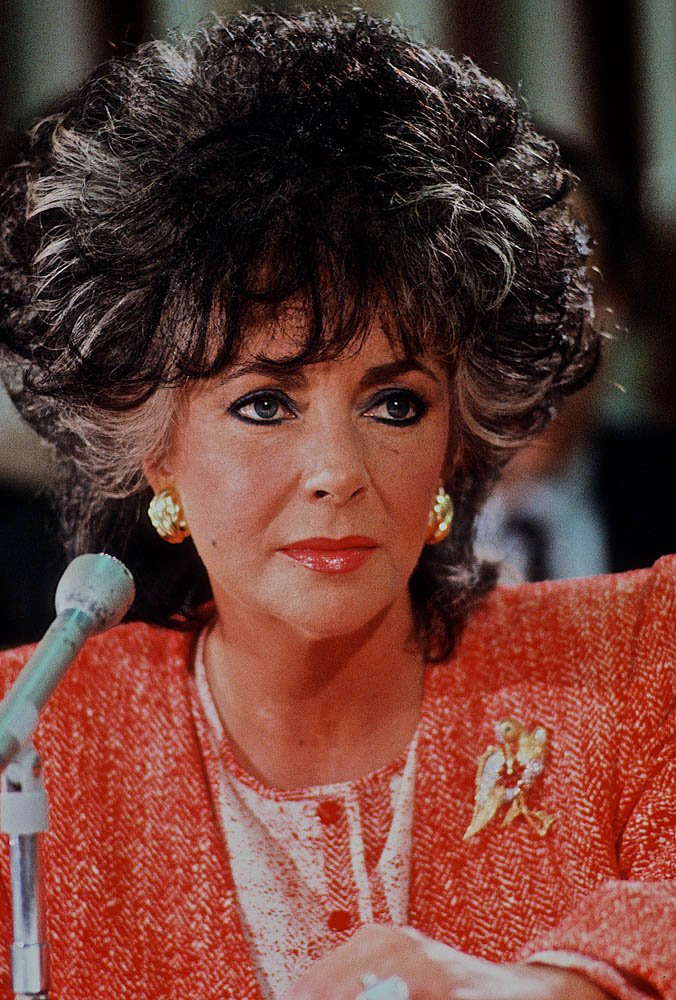
Elizabeth Taylor
2012
New York City Statistics:
182,431 cumulative AIDS diagnoses
102,100 (est.) total deaths
The Kaiser Family Foundation and the Washington Post released a joint survey of the American public’s attitudes, awareness, and experiences related to HIV and AIDS. The survey finds that roughly a quarter of Americans do not know that HIV cannot be transmitted by sharing a drinking glass—almost the same share as in 1987.
The FDA approved the first at-home HIV test that will let users learn their HIV status right away.
The FDA approves the use of Truvada® for pre-exposure prophylaxis (PrEP). Adults who do not have HIV, but who are vulnerable, can now take this medication to reduce their chances of HIV acquisition through sexual activity.
The XIX International AIDS Conference (AIDS 2012) was held in Washington, DC—the first time since 1990 that the conference has been held in the United States. Conference organizers had refused to convene the event in the U.S. until the Federal government lifted the ban on HIV-positive travelers entering the country.
During AIDS 2012, the AIDS Memorial Quilt is displayed in its entirety in Washington, DC, for the first time since 1996. Volunteers have to rotate nearly 50,000 panels to ensure that the entire work is displayed. Microsoft Research, the University of Southern California, the NAMES Project Foundation, and a handful of other institutions collaborate to create a zoomable “map” of the Quilt.


2013
New York City Statistics:
185,100 (est.) cumulative AIDS diagnoses
103,600 (est.) total deaths
The U.S. President’s Emergency Plan for AIDS Relief (PEPFAR) celebrates its 10th anniversary.
Secretary of State John Kerry announces that thanks to direct PEPFAR support, more than 1 million infants have been born HIV-free since 2003.
President Obama issues an Executive Order directing Federal agencies to prioritize supporting the HIV care continuum as a means of implementing the National HIV/AIDS Strategy. The HIV Care Continuum Initiative aims to accelerate efforts to improve the percentage of people living with HIV who move from testing to treatment and—ultimately—to viral suppression.
President Barack Obama signed the HIV Organ Policy Equity (HOPE) Act (pictured), which will allow people living with HIV to receive organs from other HIV-positive donors. The HOPE Act has the potential to save the lives of about 1,000 HIV-positive patients with liver and kidney failure annually
At the end of 2012, UNAIDS estimated that 2.3 million people worldwide acquired HIV during the year, and 1.6 million people died of AIDS-related causes. Approximately 35.3 million people around the world are now living with HIV, including more than 1.2 million Americans (PDF 477 KB)
UNAIDS also announces that new HIV transmissions have dropped more than 50% in 25 low- and middle-income countries and the number of people getting antiretroviral treatment has increased 63% in the past two years.
Sean Sasser, an AIDS activist and chef whose romance with Pedro Zamora on the MTV reality show “The Real World” in 1994 was among the first real-life gay relationships on television, dies of AIDS-related illness.

President Obama. Creator: Lawrence Jackson | Credit: The White House
2014
New York City Statistics:
187,800 (est.) cumulative AIDS diagnoses
105,100 (est.) total deaths
Major provisions of the Affordable Care Act (ACA) designed to protect consumers go into effect. Insurers are now barred from discriminating against customers with pre-existing conditions, and they can no longer impose annual limits on coverage—both key advances for people living with HIV/AIDS.
European researchers announce the results of the first phase of the PARTNER Study, an observational study focusing on the chances of sexual HIV transmission when an HIV-positive person is on treatment. The study found that no HIV-positive partner who was undergoing antiretroviral therapy and had an undetectable viral load had transmitted HIV
Douglas Brooks is appointed as the new Director of the White House Office of National AIDS Policy (ONAP). He is the first African American and the first HIV-positive person to hold the position
The Pew Charitable Trust publishes the Southern States Are Now Epicenter of HIV/AIDS in the U.S
CDC announced that only 30% of Americans with HIV had the virus under control in 2011, and approximately two-thirds of those whose virus was out of control had been diagnosed but were no longer in care.
2015
New York City Statistics:
190,300 (est.) cumulative AIDS diagnoses
106,600 (est.) total deaths
CDC’s annual HIV Surveillance Report indicates that HIV diagnosis rates in the U.S. remained stable between 2009-2013, but men who have sex with men, young adults, racial/ethnic minorities, and individuals living in the South continue to bear a disproportionate burden of HIV.
CDC announces that more than 90% of new HIV transmissions in the United States could be prevented by diagnosing people living with HIV and ensuring they receive prompt ongoing care and treatment.
Results from the Strategic Timing of Antiretroviral Treatment (START) study indicate that HIV-positive individuals who start taking antiretroviral drugs before their CD4+ cell counts decrease have a considerably lower risk of developing AIDS or other serious illnesses. Subsequent data releases show that early therapy for people living with HIV also prevents the onset of cancer, cardiovascular disease, and other non-AIDS-related diseases.
Researchers report that antiretroviral therapy is highly effective at preventing sexual transmission of HIV from a person living with HIV to an HIV-negative, heterosexual partner when the HIV-positive partner is virally suppressed. The finding comes from the decade-long HPTN 052 clinical trial.
The World Health Organization announces new treatment recommendations that call for all people living with HIV to begin antiretroviral therapy as soon after diagnosis as possible. WHO also recommends daily oral PrEP as an additional prevention choice for those who are substantially vulnerable to HIV acquisition. WHO estimates the new policies could help avert more than 21 million deaths and 28 million new transmissions by 2030.
Greater Than AIDS launches a new campaign, Empowered: Women, HIV, and Intimate Partner Violence, to bring more attention to issues of relationship violence and provide resources for women who may be at risk of, or dealing with, abuse and HIV.
UNAIDS released its 2015 World AIDS Day report, which finds that 15.8 million people were accessing antiretroviral treatment as of June 2015—more than doubling the number of people who were on treatment in 2010.
CDC announces that annual HIV diagnoses in the U.S. fell by 19% from 2005 to 2014. There were steep declines among heterosexuals, people who inject drugs, and African Americans (especially black women), but trends for gay/bisexual men varied by race/ethnicity. Diagnoses among white gay/bisexual men decreased by 18%, but they continued to rise among Latino gay/bisexual men and were up 24%. Diagnoses among black gay/bisexual men also increased (22%), but the increase has leveled off since 2010.
The U.S. Food and Drug Administration announces it will lift its 30-year-old ban on all blood donations by men who have sex with men and institute a policy that allows them to donate blood if they have not had sexual contact with another man in the previous 12 months.
2016
The CDC estimates that more than
675,000 people have died of AIDS-related causes in the U.S.
since 1981.
New York City Statistics:
192,800 (est.) cumulative AIDS diagnoses
108,100
(est.) total deaths
The New York City AIDS Memorial is dedicated on World AIDS Day (December 1, 2016)
The U=U (Undetectable = Untransmittable) campaign gains global recognition, affirming that people living with HIV who maintain an undetectable viral load do not sexually transmit the virus.
Researchers announce that an international study of over 1,900 patients with HIV who failed to respond to the antiretroviral drug tenofovir—a key HIV treatment medication—indicates that HIV resistance to the medication is becoming increasingly common.
At the annual Conference on Retroviruses and Opportunistic Infections (CROI), researchers report that a man taking the HIV-prevention pill Truvada® has contracted HIV—marking the first reported acquisition of someone regularly taking the drug.
The National Institutes of Health and its partners announced they will launch a large HIV vaccine trial in South Africa in November 2016, pending regulatory approval. This represents the first time since 2009 that the scientific community has embarked on an HIV vaccine clinical trial of this size.
The United Nations holds its 2016 High-Level Meeting on Ending AIDS. UN member states pledged to end the AIDS epidemic by 2030, but the meeting is marked by controversy after more than 50 nations blocked the participation of groups representing LGBT people from the meeting. The final resolution barely mentions those most vulnerable to HIV/AIDS: men who have sex with men, sex workers, transgender people, and people who inject drugs.
In 2016, new HIV transmissions were estimated to be 39,782 in the United States. This is down from 47,500 in 2010. HIV deaths in the US were estimated at 15,427, down from 16,997 in 2010.
2017
Approximately
36.9 million people globally are HIV-positive.
New York City Statistics:
195,000 (est.) cumulative AIDS diagnoses
109,600 (est.) total deaths
The Bill and Melinda Gates Foundation announced that it will invest $140 million in a new HIV-prevention tool. The funds will go to develop implants that can deliver HIV-prevention medication continuously over a long period—eliminating the need for people to take daily preexposure prophylaxis (PrEP).
The U.S. Centers for Disease Control and Prevention (CDC) reports significant declines in HIV/AIDS death rates for black/African Americans between 1999-2015. Among those aged 18-34, HIV-related deaths drop 80%, and among those aged 35, deaths drop by 79%.
The New York Times reports that, as a group, America’s black gay and bisexual men have a higher HIV prevalence rate than any nation in the world.
Broadway composer and lyricist Michael Friedman died on September 9th of AIDS-related illness at age 41. He is best known for his work on the play Bloody, Bloody Andrew Jackson. His death is a shocking reminder to many that HIV continues to be deadly—even for well-to-do, white men with good health insurance.
The CDC announces that people living with HIV who are on treatment and have undetectable viral loads have effectively no chance of transmitting the virus to sexual partners.

Michael Friedman
2018
December 1, 2018:
the 30th anniversary of the observance of World AIDS Day.
In 2018, gay and bisexual men accounted for 86% of HIV diagnoses among males, although they comprise only ~4% of the U.S. male population.
New York City Statistics:
196,900 (est.) cumulative AIDS diagnoses
111,100 (est.) total deaths
Over half of people living with HIV worldwide are accessing antiretroviral therapy, marking significant global progress in treatment expansion.
Mathilde Krim dies at age 91. Dr. Krim, a geneticist and virologist who turned from studying cancer to studying AIDS, started the AIDS Medical Foundation in 1983 and then became the founding chairwoman of the Foundation for AIDS Research (amfAR) in 1985. She raised hundreds of millions of dollars for AIDS research, prevention, treatment, and advocacy. In announcing her passing, the New York Times calls her “America’s foremost warrior in the battle against superstitions, fears, and prejudices that have stigmatized many people with AIDS.”
PEPFAR (the President’s Emergency Plan for AIDS Relief) celebrates its 15th anniversary. When PEPFAR began in 2003, only 50,000 people in Africa were on lifesaving HIV treatment. PEPFAR now supports over 14 million people on treatment globally.
A study of MSM in Thailand finds that having a sexually transmitted infection (STI) does not affect the ability of people living with HIV to achieve and maintain an undetectable viral load. The results confirm the generalizability of the “Undetectable = Untransmittable” (U=U) message.
A new study reports that targeted, high-coverage roll-out of pre-exposure prophylaxis (PrEP) was associated with a 25% reduction in new HIV diagnoses in one year. The study followed 3,700 MSM in New South Wales, Australia, who were taking PrEP with high levels of adherence. It is the first empirical study to test PrEP’s population-level effectiveness.
The U.S. Preventive Services Task Force, an independent, volunteer panel of national experts in prevention and evidence-based medicine, issues a draft recommendation that clinicians should offer PrEP to individuals with high vulnerability for HIV acquisition. The Task Force gives its “A” recommendation—the strongest endorsement it can give—to PrEP, stating that, when taken as prescribed, PrEP is highly effective at preventing HIV among those most vulnerable, and concluding with “high certainty” that there is a substantial benefit to the target population.
2019
In 2019, there are nearly 1.2 million people in the United States living with HIV, and about 14% of those don’t know they are positive
New York City Statistics:
198,400 (est.) cumulative AIDS diagnoses
112,600 (est.) total deaths
At the 2019 Conference on Retroviruses and Opportunistic Infections (CROI), researchers announce the second cure for a person with HIV. Like the 2007 case of the “Berlin Patient” (the first person to be cured of HIV), the “London Patient” has no detectable HIV three years after he received a bone marrow transplant from a donor who is genetically immune to HIV, despite having been off antiretroviral therapy (ART) for 18 months. Both patients received bone marrow transplants to treat cancer. While the treatment is too dangerous and costly for widespread use, researchers hail the news as further proof that HIV can be cured.
NIH announces the launch of a clinical trial to evaluate long-acting ART for maintaining HIV suppression in people who find it a challenge to take daily ART in pill form. The study called Long-Acting Therapy to Improve Treatment Success in Daily Life, or LATITUDE will help determine whether a combination of two experimental injectable formulations of ART is better than conventional daily medications in managing HIV in this population.
March 25: Surgeons at Johns Hopkins Medical Center in Baltimore, Maryland, performed the first living donor HIV-to-HIV kidney transplant in the United States.
December 11: HRSA’s HIV/AIDS Bureau released a new report showing that clients receiving Ryan White HIV/AIDS Program (RWHAP) medical care were virally suppressed at a record level – 87.1 percent – in 2018. More than half of people with diagnosed HIV in the U.S. received RWHAP services in 2018.
The CDC reports that fewer than 40 percent of people in the U.S. have ever been tested for HIV.
2020
New York City Statistics:
199,800 (est.) cumulative AIDS diagnoses
114,800 (est.) total deaths
The COVID-19 pandemic disrupts HIV testing, prevention, and treatment services worldwide.
CDC publishes a new study showing that the age-adjusted rate of HIV-related deaths among people with HIV in the U.S. fell by nearly half from 2010 to 2017. Much of the reduction was likely the result of early testing and diagnoses of people with HIV and helping them to get – and stay on – lifesaving treatment, underscoring the need to sustain and scale up the EHE initiative.
2021
New York City Statistics:
201,400 (est.) cumulative AIDS diagnoses
116,500 (est.) total deaths
Long-acting injectable antiretroviral treatments are approved, offering new options for HIV management.
January: HHS released the HIV National Strategic Plan for the United States: A Roadmap to End the Epidemic 2021-2025 (HIV Plan), with a 10-year goal of reducing new HIV transmissions by 90% by 2030. It details four goals with objectives and strategies for use by all partners and stakeholders. The HIV Plan and the EHE initiative are closely aligned and complementary. The EHE initiative is serving as a leading component of the work by the U.S. Department of Health and Human Services to implement the HIV Plan.
Anthony Fauci, MD, director of the National Institute of Allergy and Infectious Diseases, compares lessons learned in the AIDS epidemic and the COVID-19 pandemic during a presentation for the Center for AIDS Research on April 7.
June 5: This date marks the 40th anniversary of the first public scientific reporting in the U.S. Centers for Disease Control and Prevention’s Morbidity and Mortality Weekly Report (MMWR) on what would become known as AIDS.
July 3: This date the 40th anniversary of the first mention of AIDS in the New York Times in the article titled “Rare Cancer Seen in 41 Homosexuals” by Lawrence K. Altman.
There was a 14% increase in the annual number of new HIV diagnoses in NYC from 1,396 cases in 2020 to 1,594 cases in 2021. While a yearly increase in new diagnoses in NYC is atypical, the increase in new diagnoses in 2021 reflects a rebound from the unexpectedly steep drop during the first waves of the COVID-19 pandemic in 2020, when HIV testing services were less available and accessible.
2022
New York City Statistics:
203,150 (est.) cumulative AIDS diagnoses
118,200 (est.) total deaths
Doctors announced that a fourth person in history has been cured of HIV through a stem cell transplant. The patient had cancer, of which he has also been cured. But the doctors warned the procedure cannot be made available on a large scale.
2023
In 2023, there are 1,132,739 people aged 13 and older living with diagnosed HIV people in the United States, and about 13% of those don’t know they are positive
New York City Statistics:
134,445 living with HIV in New York City
1,686 people were newly diagnosed with HIV in 2023, a 7.6% increase from 2022
May: the FDA updated its blood donor eligibility guidance, ending longstanding discriminatory policies that excluded gay and bisexual people from donating blood while maintaining appropriate safeguards to protect recipients of blood products.
Researchers confirm that a fifth person, called the Düsseldorf patient, is cured of HIV. The fact was first announced at a conference in 2019, from which it has since been pending verification.
A clinical trial for a preventive HIV vaccine called VIR-1388 began in the United States and South Africa. The vaccine aims to instruct T cells to recognize HIV in the human body and start a reaction to keep it from creating a chronic infection. Initial results are expected to come out in late 2024.
UNAIDS updated its Global AIDS Statistics, reporting that in 2023, approximately 39.9 million people were living with HIV, with 1.3 million new infections and 630,000 AIDS-related deaths.
2024
At the 25th International AIDS Conference, researchers presented results from the PURPOSE 1 trial, highlighting the efficacy of lenacapavir, a twice-yearly injectable drug, in preventing HIV infections among cisgender women in sub-Saharan Africa. The study reported zero infections among participants receiving lenacapavir, marking a significant advancement in HIV prevention strategies.
A case study introduced the “next Berlin Patient,” a 60-year-old man who achieved long-term HIV remission following a stem cell transplant from a donor with a single CCR5-delta32 mutation. This case suggests potential for more scalable HIV cure strategies.
For the first time, the AIDS Memorial Quilt was showcased on the White House South Lawn. President Joe Biden and First Lady Jill Biden hosted the event, honoring those lost to AIDS and reaffirming the administration's commitment to ending the epidemic.
Born with HIV, Hydeia Broadbent became a prominent activist from a young age, advocating for HIV/AIDS awareness and education. She dies at the age of 39.

Hydeia Broadbent. Photo: Jacob Kepler from POZ Magazine
2025
Ongoing international reviews and freezes of U.S. foreign aid reshape the global response to HIV. Cuts to foreign aid, including from traditional donors such as the United States, result in disruptions to HIV prevention, testing, and treatment services in multiple countries, with documented declines in case identification, contact tracing, and community-based outreach for key populations.
Modeling studies presented at international conferences show that funding cuts to global HIV programs have already led to declines in testing and treatment starts in some countries and could result in millions of additional infections and HIV-related deaths by 2030 if long-term support continues to decline.
Researchers and public health advocates warned that federal cuts to domestic HIV research and prevention grants — including at the National Institutes of Health and CDC — threatened progress, potentially undermining prevention, surveillance, and outreach, especially in communities disproportionately affected by HIV.
2026
New York City Statistics:
210,000+ cumulative AIDS diagnoses
125,000+ total deaths
Global health advocates warn that donor nations (including major contributors to HIV financing) have significantly reduced pledges for the 2026-2028 cycle, with only a fraction of urgently needed funds committed. These cuts threaten programmes supported by multilateral funds such as the Global Fund, which historically provides a large share of HIV prevention and treatment resources; health researchers emphasize that people living with HIV and communities in low-income countries are disproportionately affected.
New prevention tools, such as long-acting injectable HIV prevention drugs, begin to be deployed in some high-burden countries like Zimbabwe — even as the sustainability of broader HIV programmes remains uncertain due to funding pressures.
February: The U.S. Fourth Circuit Court of Appeals upheld a policy allowing the U.S. military to ban new enlistment of people living with HIV, a decision criticized by advocates as out of step with modern medical evidence showing undetectable individuals pose no transmission risk.
Images on this site are used for non-commercial, educational purposes only, in alignment with fair use principles. If you are a rights holder and have concerns about any use, please reach out to us directly using the Contact Page.
Statistical data is sourced from the NYC Department of Health and Mental Hygiene (NYC DOH) and the Centers for Disease Control and Prevention (CDC). Historical milestones and narrative events are compiled from the HIV.gov national timeline, UNAIDS, and the archives of Visual AIDS and amfAR, among others. For HIV/AIDS information and resources in New York City, please visit the New York City Department of Health. Use their NYC Health Map to find services in New York for HIV testing, HIV services for people living with HIV/AIDS, and NYC Condoms.